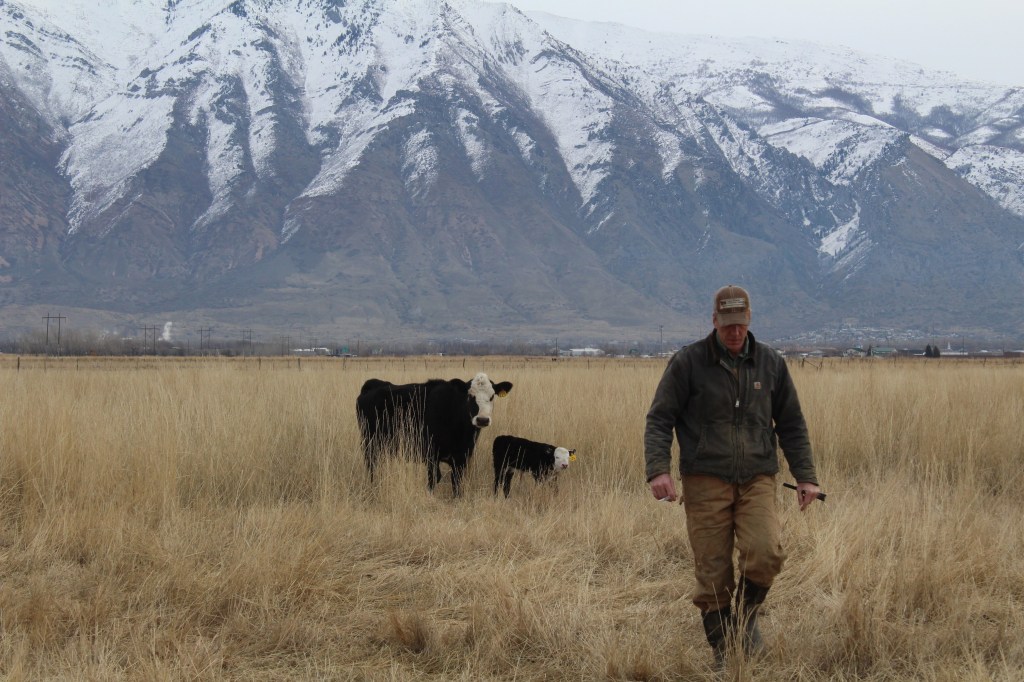
UTAH- Life-long farmer Frank Nelson of Utah County looks over what used to be rolling farmland. His property is now boxed in by houses and other city developments and a highway runs down the middle. “It’s crazy how fast everything has changed,” he said. “I remember when I wasn’t the only farmer up here. Now I have to deal with traffic and neighbors who don’t understand what is associated with farming: the smell, the sounds, and everything else.”

Nelson is not alone in this experience. Many farmers and agriculturalists around the country deal with this phenomenon, known as urban sprawl, on a daily basis. Brent Money, another Utah County farmer is the fourth generation to run his ranch. He said, “sprawl has affected my operation, not as heavily as in some areas, but it does affect the way we do business and our ability to farm.”

One factor that plays a key role in urban sprawl is population growth. According to data from the census, in the past ten years, Utah has had the most population growth of any of the fifty states.

Urban sprawl and commercial development permanently remove from agricultural productivity an estimated 10 acres every minute of the year, according to an article called “A New Farming Framework” by Dan Murphy. This striking statistic brings to mind the question: what can anyone do without agriculture? Urban society continues to expand which in turn has a negative impact on the agricultural community. Utah is an example of this growth known as urban sprawl.

Urban sprawl is an ongoing issue. Urbanization impacts communities in Utah and around the world. It causes issues with property rights. Although it is a problem, there are ways to manage it and inform the public of what they can do.

Urban sprawl is frequently defined as, “unplanned, incremental urban growth which is often regarded unsustainable,” according to an article titled “Traffic, urban growth, and suburban sprawl” by Michael Batty. An article called “Urban Sprawl Measurement from Remote Sensing Data” from Science Direct said that sprawl affects agriculture in many ways, one of the direct implications is “change in land-use and land-cover of the region as [it] induces the increase in built-up and paved areas (Bhatta).”

Sean Michael is a Utah State University professor of landscape architecture and environmental planning. In an email interview, he explained sprawl as an economic and social phenomenon. “It’s developers who look for more attractive land (usually undeveloped, on the edges of currently developed lands) due to lower costs, and it’s buyers trying to find an idyllic place to live that leapfrogs out to a less crowded, quieter, and lower-cost location.”

Money explained that sprawl “is people wanting to move out into the country. They want to buy a little lot and be a country-type person.” Such growth and expansion from cities into the country are normal, however, if it occurs rapidly it can be detrimental.

Michael explained where and how sprawl began. He said, “we first see it in the European monarchies that sought to be out away from the dirty urban center and near the quiet, agrarian countryside.” He explained that this pattern continued in America with Thomas Jefferson and George Washington’s estates in the Virginian countryside. It continues today as “the populace tries to emulate the well-to-do. To escape the nasty urban woes and reap the rewards of the quiet country,” he said.

Nelson explained some of the difficulties he has seen from urban sprawl. He said that sometimes the idea of living on a farm “becomes somewhat romantic to people, yet they don’t realize what it involves or what it entails.” He continued, “my dad used to always say that people and agriculture never mix. Even though they want to, there are just too many things involved in agriculture that don’t fit in with urban areas.” He explained that there’s a learning curve for those new to agriculture.

Josh Dallin is a Utah State University extension assistant professor from a six-generation farming family. In an email interview, Dallin explained that in Utah specifically, “our easily accessible resources tend to run along the Wasatch front. This causes continued growth in these areas. This growth ends up equating to less and less farmland.”

Money said, “as the population continues to grow and as areas get built out, it will naturally push to some of the outlying communities. Those types of things will definitely impact the way I do business.”

Dallin said sprawl “is a big problem in Utah. Especially in Utah, Salt Lake, Davis, and Weber Counties. Most farmland in these counties is being developed into homes or businesses.”

Oftentimes, this growth has a more negative impact on farmers than on others involved. Dallin explained, “when these producers are approached by developers for large sums of money, it makes it hard for them not to sell.” He said that even if they don’t sell it can become difficult to continue to operate. “Urbanization can easily force a producer out,” he said.

An article from Utah Farm Bureau called “Some decisions don’t matter, and some do” tells the story of a family faced with this decision of selling their farm. The Wheadon family had been farming for a long time, but as the city of South Jordan grew around them, they found themselves surrounded by urban development. They explained, “urbanization is a threat to a little family farm like ours. Eminent domain is the right of a government or its agent to take away private property for public use. When it comes to eminent domain, a farmer isn’t left with much of a leg to stand on.”

The Wheadon’s aren’t the only people who feel this way. Nelson said that in his experience, “it’s not been a situation where there’s a lot of respect for my property or my rights.” Money said, “my right to farm my property should be just as valued as a developer’s or a city’s right, but in most cases, it’s the farmer that loses out.”

Michael explained that private property rights are in “an extreme position that is too often absent of compassion for others, is selfish, and lacks a spirit of civic duty that American’s value.” He said that though this is where rights are now, they ought to be “in a position of balance, not eschewed and not domineering.” Dallin said, “if someone owns a piece of property, they are entitled to sell it, keep it, farm it, or do what they would like as long as it is within the bounds of the local regulations.”

What can be done to alleviate this problem? Money suggested a change in city development patterns. He said, “if cities could develop from the inside out rather than hopscotching to different parcels of ground, that could help minimize it.” He added, “if farmers can make a living and not be regulated and forced out by urban sprawl, they will continue to farm.”

Dallin proposed possible solutions to this ongoing problem. He said, “pay our farmers and ranchers a better wage so they are more inclined to want to continue” Oftentimes society takes farmers and agriculture for granted. According to data from CNBC and Statista, those involved in agriculture earn about $20,000 less than the average American.

Dallin also suggested creating incentives for people to buy already built or older homes and encouraging home building to happen on less-productive pieces of land not presently used for farming.

Michael advised “skilled, well-informed, and devoted planners must be in positions to influence how lands are used.” He said that changes in the land use code and policies should be made. He continued, “politicians must support these hard decisions that are choosing long-term benevolent acts over short-term political gain.”

Brittney Harris is a planner for Lehi City. In an email interview, Harris explained what Lehi is doing to minimize the negative agricultural impacts of urban sprawl. She said they are working on a transfer of development rights ordinance in order to hopefully preserve some of the remaining agricultural lands.

She explained the city’s right to farm act that is meant to further protect farming land when it becomes surrounded by developments. Harris said, “It includes having the new development provide a 6-foot non-climbable agricultural fence and a statement that the area is next to farmland and thus subject to the noises and smells associated with agriculture.”

Harris also explained a couple positives of urbanization. One such example was cheaper housing options. She said, “there is some validity in the fact that you can typically afford houses on the edges of urbanized areas.” She added, “urbanization is just how we are growing. Growth is inevitable and it is a good thing, we just need to be more purposeful in how we grow and save some of the prime farmland we have left.”

Michael said, “The market responds to what supply is on hand. The developers respond to the rules of the game established by planners and politicians. The laws we have on the books must be written with courage, an eye to the future, and a well-informed understanding of the past.”

Harris said, “I think preserving agricultural land is best done in large patches. When a city gets to the point that only a few fragmented pieces of farmland are left, it makes it much harder to preserve in a meaningful way.”

Dallin explained the importance of agricultural literacy in today’s society. He said, “I think that agricultural literacy is a key factor here. We need to recognize the importance of having the farmland adequate enough to sustain our much-needed food reserves. We need to make changes to ensure that we are going to be set for years to come with these resources.” He added, “Selling off farms will not be the overall sustainable answer. Land is precious and we’ve got to manage it carefully.”

Money said, “when farm ground is gone, it’s gone. It’s never going to come back.”